

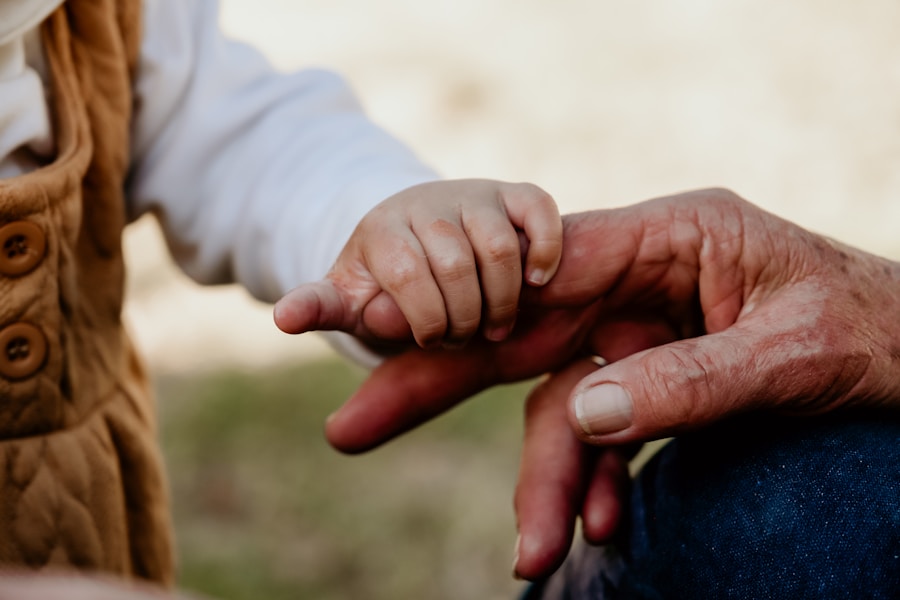
This article explores the complex and often humorous relationship between older and younger siblings, as illustrated by a curated selection of twenty quotes. It examines the unique dynamic that emerges from this age difference, a dynamic that can be characterized by a blend of guidance, exasperation, protection, and a shared history. Think of this relationship as a river, with the older sibling often acting as the initial, sometimes rocky, channel, guiding the flow of the younger sibling downstream.
==The Elder as Guide: Early Lessons and Protection==
The role of the older sibling frequently involves an early assumption of a guardianship role. This can stem from proximity, a slight advantage in experience, or simply the natural inclination to look after a younger kin. The quotes in this section highlight instances where the older sibling imparts knowledge, offers protection, or sets precedents for the younger.
===The Burden of Experience===
Older siblings often experience milestones before their younger counterparts. This can translate into advice, warnings, or even unsolicited guidance. The following quotes illustrate this phenomenon.
- “You’ll learn to tie your shoes this way because it’s faster. Trust me.” – This quote embodies the practical, often efficiency-driven advice passed down. The older sibling, having mastered the task, offers a shortcut, a valuable commodity in the early years of a child’s life. It’s a small act, but one that can foster a sense of reliance.
- “Don’t touch that. You’ll regret it. I did.” – This highlights the cautionary tale aspect. The older sibling’s own past mistakes become valuable lessons for the younger. It’s a form of preemptive damage control, driven by experience.
- “Mom said no. That means you have to be the one to ask. I already got told off.” – This quote reveals the strategic avoidance of direct confrontation with parental authority. The older sibling, having already navigated the parental “no,” cleverly deflects the task to the younger, leveraging their own experience of consequence.
- “Just pretend you’re me. They’ll believe it.” – This speaks to the exploration of identity and the blurring of lines, especially in childhood. The older sibling may find amusement in a younger sibling mimicking them, or may even facilitate it as a form of play or manipulation.
- “Wait for me. We’ll go together.” – This is a fundamental expression of solidarity and shared experience. It emphasizes the desire to not leave a sibling behind, to navigate new challenges as a unit. It’s a foundational building block of sibling loyalty.
==The Younger’s Admiration and Annoyance: Navigating the Shadow===
Younger siblings often operate in the shadow of their older counterparts, looking up to them for guidance while simultaneously chafing under their authority. This section explores the dual nature of this dynamic, where admiration coexists with exasperation. It’s a delicate dance, where the younger sibling is often the junior partner, sometimes leading, sometimes being led.
===The Object of Imitation===
The older sibling serves as a primary role model for the younger, whether intentionally or not. This can lead to imitation, both positive and negative.
- “Why does he/she always get to decide?” – This quote captures the inherent frustration of a junior position. The younger sibling questions the perceived authority of the older, especially when it limits their own freedom or choices.
- “I want to be just like you when I grow up.” – This is a straightforward expression of admiration. The younger sibling views the older sibling’s skills, knowledge, or even perceived coolness as aspirational.
- “Can you teach me how to do that?” – This is a direct request for instruction, signaling recognition of the older sibling’s competence and willingness to impart it.
- “Stop telling me what to do!” – This is a common cry of independence. The younger sibling seeks autonomy and resents constant direction, even if that direction is well-intentioned.
- “You’re so lucky you already know how to…” – This highlights the younger sibling’s awareness of the older sibling’s perceived advantages, stemming from their head start. It can be tinged with envy or a genuine desire for that knowledge.
==The Balancing Act: Protection and Teasing==
The relationship between siblings is rarely one-dimensional. The same older sibling who might fiercely defend a younger sibling from external threats could also be the first to tease them mercilessly. This duality is a hallmark of sibling bonds. Imagine a guard dog that is both protective of its territory and playful with its pack.
===The Dual Nature of Sibling Interaction===
This section delves into the paradoxical behaviors that often define the older-younger sibling dynamic.
- “Nobody messes with my brother/sister but me.” – This is a powerful declaration of loyalty and possessiveness. The older sibling sees the younger as part of their dominion, and any external threat is met with aggression. It’s a fierce, almost primal, instinct.
- “You’re so clumsy. Did you fall out of bed again?” – This quote exemplifies the teasing that is often a form of verbal sparring. It’s meant to be humorous, pushing boundaries within the comfort of a familiar relationship.
- “I’m not telling Mom. But you owe me.” – This illustrates the power dynamic and the negotiation of secrets. The older sibling offers a degree of leniency, but at a price, establishing a transactional element often present in sibling relationships.
- “That shirt makes you look ridiculous. But I still love you.” – This combines blunt honest with affection. The older sibling isn’t afraid to deliver criticism, but it’s always underpinned by a deeper bond.
- “We’re a team, remember?” – This reinforces the idea of collective identity and shared purpose. It’s a reminder that despite disagreements, they face the world together.
== Shared History and Inside Jokes: The Unspoken Language===
Sibling relationships are built on a foundation of shared experiences, memories, and an understanding that often transcends verbal communication. Inside jokes and shared historical narratives act as a private language, inaccessible to outsiders. This shared history is the bedrock upon which the entire sibling structure is built.
===The Archive of Shared Memory===
The quotes in this section point to the unique internal world created by siblings.
- “Remember that time when…?” – This is the universal opener to a shared memory, triggering a cascade of recollections and common understanding. It’s a key that unlocks a vault of private humor and significant moments.
- “Only you would understand that.” – This speaks to the inherent exclusivity of sibling communication. Their experiences have forged a unique lens through which they interpret the world, making certain references and jokes resonate only within their bond.
- “We’ve been through worse, haven’t we?” – This quote highlights the resilience of sibling relationships. Faced with challenges, they draw strength from their past shared struggles, knowing they can overcome future obstacles together.
- “It’s like that thing we always say…” – This refers to the formation of catchphrases, recurring jokes, or even unspoken agreements that become codified within the sibling dynamic.
- “You’re the only one who gets it.” – Similar to the others, this emphasizes the deep level of understanding and shared perspective that develops over years of living together. It’s a testament to the profound connection forged through shared existence.
== The Enduring Bond: A Lifelong Connection===
Despite the inevitable conflicts and differing personalities, the bond between siblings, especially between an older and younger, often endures as one of the most significant and lasting relationships in a person’s life. This section considers the overarching impact of this dynamic. The river, though it may have meandered and faced rapids, continues its steady course, nourishing the landscape it traverses.
=== The Legacy of Siblinghood===
The final quotes reflect on the lasting impact of the older-younger sibling dynamic.
- “I wouldn’t be who I am without you.” – This acknowledges the profound influence of the older sibling on the younger’s development and identity. It’s a recognition of the formative role played.
- “We’ll always have each other’s back.” – This reiterates the enduring promise of mutual support that underpins the sibling relationship, even into adulthood. It’s a commitment that transcends time and circumstance.
- “You were my first best friend.” – This sentiment underscores the unique position of an older sibling in a younger sibling’s life, establishing a primary connection that often outlasts many other childhood friendships.
- “Even when we fight, you’re still my brother/sister.” – This is a testament to the unconditional nature of sibling love. The conflicts are seen as temporary disruptions in an otherwise unbreakable bond.
- “I know you’ll always be there for me.” – This expresses a deep-seated trust and reliance, a confidence in the unwavering presence of a sibling through life’s uncertainties. It’s a cornerstone of familial security.